About Gomoku
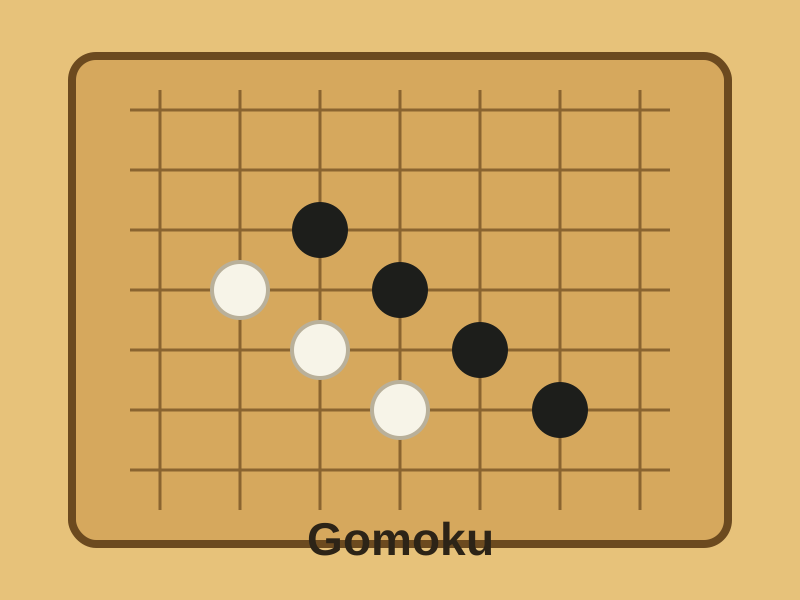
Gomoku, also known as Five in a Row, is a traditional strategy board game with roots in East Asia and strong historical ties to China. The idea is simple: two players take turns placing black and white stones on a grid, and the first side to connect five stones in a straight line wins.
In this game, you play black and move first. The computer opponent plays white after your move. Lines can be horizontal, vertical, or diagonal, and this game uses the casual free-style rule set without forbidden moves.
Origin and background
Gomoku belongs to the family of connection games played on grid boards. Its appeal comes from a simple goal: make five in a row before the opponent does. Because every stone remains on the board, each move permanently changes the shape of future attacks.
Beginners often treat Gomoku as a race to place five stones in one direction. Stronger play is more about building two threats at once. A single open four can force a response, but a double threat can make the next move impossible to defend.
How to play
Choose an empty intersection and place a black stone. The computer responds with a white stone. Continue alternating turns until one side connects five stones in a straight line.
The board is easiest to read if you look for lines with two open ends. A line with blocked ends is much less dangerous than one that can grow in two directions.
Common mistakes
- Playing only at the edge of the board, where there are fewer directions to attack.
- Extending one line while ignoring an opponent's open four.
- Making single threats that are easy to block instead of building connected patterns.
Why it is still fun
Gomoku is still fun because a full game can be played quickly, but the decisions are never completely automatic. Every stone can be part of more than one future line, so a small local move can create a large global threat.
It is a good starting point for players who want a strategy game without reading a long rulebook.